How to Reduce CAC in E-commerce using PR and Google Ads
Articles

Customer acquisition cost has become one of the most closely watched metrics in e-commerce. While online sales continue to grow globally, attracting new customers is becoming increasingly expensive. Competition across digital channels is intensifying, and consumers are taking longer to make purchasing decisions.
For many e-commerce businesses, the first response to rising CAC is to optimize advertising campaigns. Marketing teams adjust bidding strategies, test new creatives, refine audiences, and improve landing pages. These activities are important, but they address only part of the challenge.
The reality is that customer acquisition costs are influenced long before a user clicks an ad. People rarely discover a product, click an advertisement, and purchase immediately. Most buying journeys involve multiple touchpoints. A potential customer may read an article, see a media mention, encounter a brand on social media, compare alternatives, and only then perform a Google search.
As customer journeys become more complex, businesses increasingly benefit from combining brand visibility with performance marketing. While PRNEWS.IO helps brands increase visibility through trusted media placements, G-MOS focuses on improving Google Ads performance through automation and smarter campaign management. Together, they address different stages of the customer journey, helping businesses build awareness before the search and capture demand when customers are ready to buy.
This is where PR and Google Ads can work together to improve acquisition efficiency. One channel helps create awareness and trust, while the other captures demand when purchase intent is strongest.
Why is customer acquisition cost becoming harder to control
Customer Acquisition Cost (CAC) measures how much a business spends to acquire a new customer. It is commonly calculated by dividing total marketing and sales costs by the number of new customers acquired during a given period.
While the formula itself is straightforward, the factors influencing CAC have become increasingly complex.
According to recent Searchlab benchmarks on Google Ads, search advertising remains one of the highest-performing digital channels, but competition continues to increase across most industries. As more businesses invest in paid search, maintaining profitability requires more than simply increasing budgets or improving bids. At the same time, consumer behavior has undergone significant changes. Customers no longer move through a predictable funnel. They discover brands across multiple platforms, conduct extensive research, compare alternatives, and often revisit businesses multiple times before making a conversion.
As a result, acquisition costs are no longer determined solely by advertising performance. They are influenced by how familiar customers are with a brand before they enter the buying process.
Why brand awareness matters more than ever
Reducing CAC has become increasingly difficult because customer acquisition is no longer driven by a single interaction. Research from Google and Boston Consulting Group shows that consumers move between searching, scrolling, streaming, shopping, and comparing before making a purchase decision. The path to conversion is rarely linear, especially in competitive e-commerce categories. For marketers, this presents a significant challenge. Advertising platforms are highly effective at capturing existing demand, but demand itself has to come from somewhere. Before customers search for a product, compare alternatives, or click an ad, they often need a reason to recognize and trust a brand.
This is especially relevant in retail, where online visibility can influence both digital discovery and in-store purchases. Pluspoint highlights how retail SEO helps bridge the gap between online searches and physical store visits by making businesses easier to discover when customers search for products or services.
This is where visibility becomes a crucial factor in acquisition efficiency. When people encounter a company through industry publications, media coverage, expert commentary, or product reviews, they become familiar with the brand before entering the buying process. That familiarity can influence future search behavior, increase branded search volume, improve click-through rates, and contribute to lower acquisition costs over time.
How PRNEWS.IO helps strengthen brand visibility
Visibility plays an important role in how customers discover and evaluate brands. While paid advertising can generate immediate traffic, media exposure helps businesses build familiarity long before a purchase decision is made.
A mention in a respected publication, an expert contribution, or a feature article can introduce a brand to potential customers who may not yet be actively searching for its products. These interactions create awareness and increase the likelihood that consumers will remember the brand later.
This is where PRNEWS.IO supports brands and e-commerce businesses. By helping brands distribute content across relevant online media and industry publications, the platform enables companies to expand their reach beyond owned channels and connect with new audiences.
The value extends beyond visibility alone. Media placements can contribute to referral traffic, branded search growth, and increased trust, all of which influence how customers engage with a brand later in their buying journey.
The growing connection between media visibility and performance marketing is also reflected in the recent collaboration between PRNEWS.IO and G-MOS. The partnership was created to help businesses strengthen brand visibility through media placements while improving the efficiency of their Google Ads campaigns, connecting awareness-building activities with measurable acquisition outcomes.
Why branded searches often convert better
Not all search traffic has the same value. A customer searching for a broad category term such as "wireless headphones" is still evaluating options. A customer searching for a specific brand has already completed part of that evaluation process.
This difference matters because branded searches often signal familiarity and intent. Users already know the company, have encountered it before, or have been influenced by earlier touchpoints.
As a result, branded search campaigns frequently deliver:
Higher click-through rates
Stronger conversion rates
Lower acquisition costs
Better return on ad spend
For many e-commerce brands, increasing branded demand can be just as valuable as improving campaign performance.
How Google Ads turns awareness into demand
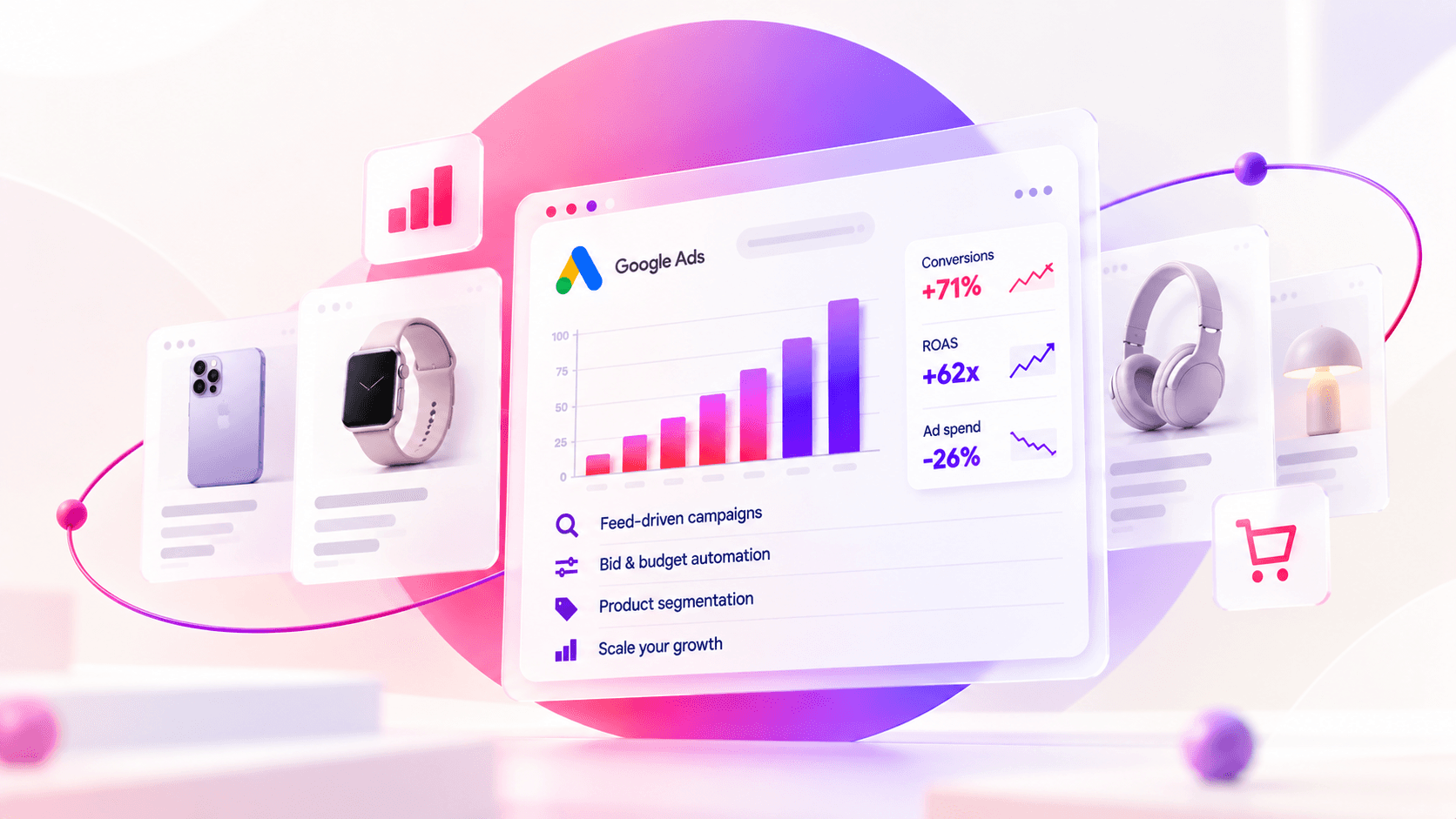
Awareness alone does not generate revenue. At some point, customers need a way to move from consideration to action. Google Ads remains one of the most effective channels for capturing intent because it connects businesses with users who are actively searching for products, solutions, and brands.
Unlike awareness-focused channels, paid search operates close to the point of purchase. When someone searches for a product category, a specific brand, or a comparison query, they are often much closer to making a decision.
This makes Google Ads particularly effective at converting demand that has already been influenced by earlier marketing activities, including PR, SEO, social media, and content marketing.
Industry benchmarks continue to show strong performance for search advertising across a wide range of sectors.
Why G-MOS focuses on acquisition efficiency
Generating demand is only one side of the equation. As accounts grow, marketers face another challenge: managing budgets efficiently and allocating spend where it delivers the strongest return.
For e-commerce businesses, this can quickly become difficult. Large accounts often include hundreds of campaigns, thousands of products, multiple bidding strategies, and constantly changing performance data.
G-MOS focuses on helping advertisers improve acquisition efficiency by automating routine campaign management tasks and providing greater control over budget allocation. Instead of relying entirely on manual reviews, marketers can identify opportunities faster and make more informed decisions based on performance data. This becomes particularly important as demand grows. Businesses still need to ensure that budgets are distributed effectively, high-performing campaigns receive sufficient investment, and missed opportunities are identified early. For brands focused on reducing CAC, efficiency is just as important as visibility.
Measuring the impact beyond last-click attribution
One reason PR is sometimes undervalued is that its influence often appears indirectly. Media coverage may not generate immediate conversions, but it can shape customer behavior throughout the buying process. A user who discovers a brand through an article today may return weeks later through a branded search or a Google Ads campaign.
Looking only at last-click attribution rarely tells the full story.
Businesses evaluating the impact of PR and Google Ads should monitor a broader set of metrics, including:
Metric | Why it matters |
Customer Acquisition Cost (CAC) | Measures acquisition efficiency |
Branded Search Volume | Indicates awareness growth |
Direct Traffic | Reflects increasing brand recognition |
Assisted Conversions | Shows the influence of earlier touchpoints |
ROAS | Measures advertising performance |
Impression Share | Identifies missed opportunities |
Customer Lifetime Value | Evaluates long-term profitability |
Together, these metrics provide a more complete view of how awareness-building and demand-capture activities contribute to growth.
Final thoughts
Reducing CAC is rarely the result of a single optimization tactic. The most successful brands build systems where different channels reinforce one another. PR helps businesses increase visibility and credibility, SEO improves discoverability, and Google Ads captures demand when customers are ready to take action. When these channels work together, customer acquisition becomes more efficient, marketing investments go further, and growth becomes easier to sustain over time.
For e-commerce businesses looking to improve acquisition efficiency, the goal is not to choose between PR and Google Ads. The real opportunity lies in understanding how both contribute to the customer journey and how they can work together to lower the cost of acquiring new customers.
6 minutes
Posted by

Nadiia Prokofieva
CMO
Background in PPC and digital marketing, focused on Google Ads automation and eCommerce growth.