How to scale Google Ads on autopilot and track sales in CRM with UTM Tracking
Articles
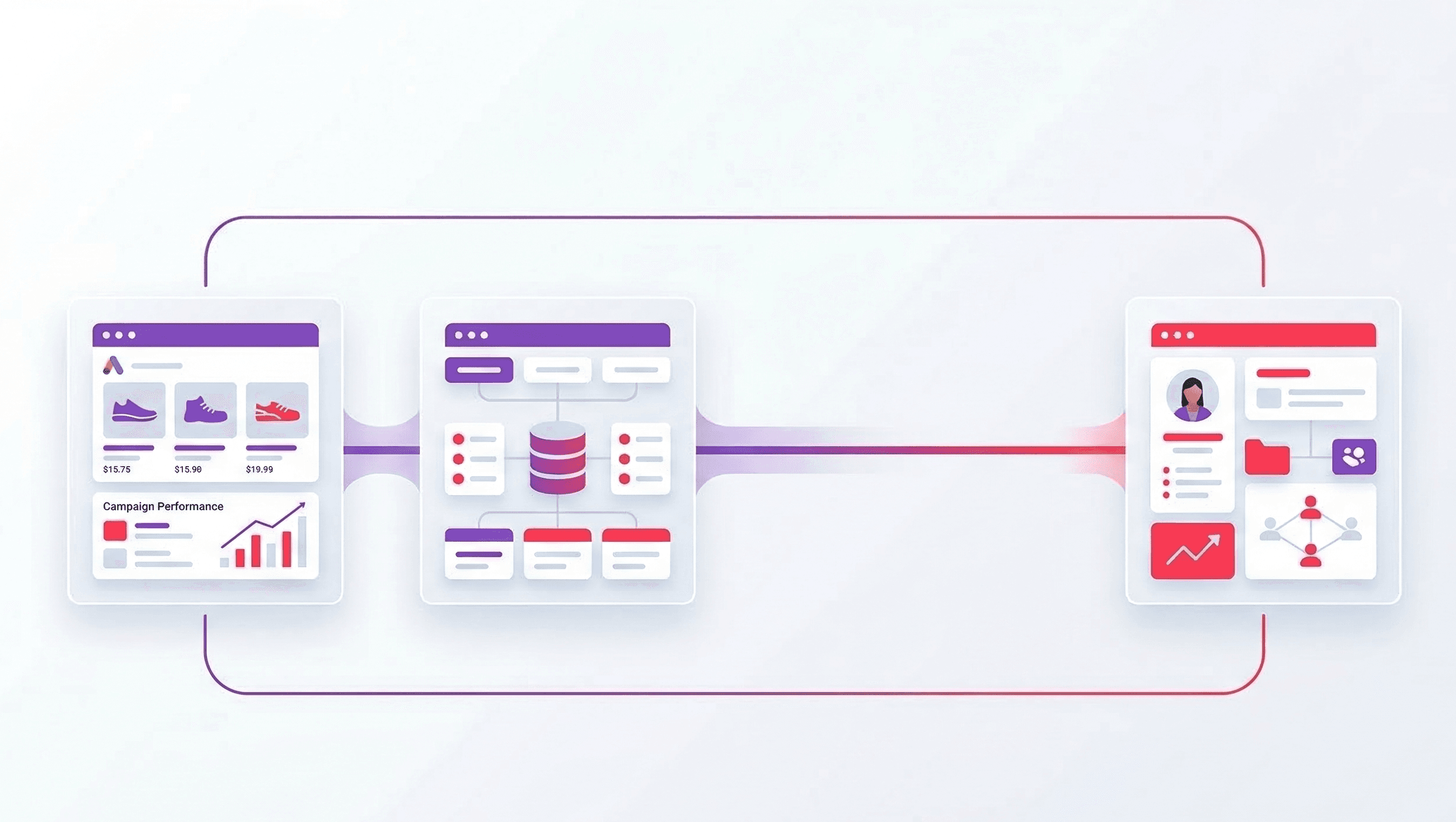
The marketing landscape has become highly dynamic over the past decade. This means that the customer journey is now more complicated and requires more complex approaches to attract users and track information about them. In this article, we’ll discover how to involve modern practices to generate Google Search Ads and track conversions from these campaigns into the Customer Relationship Management system on autopilot. We’ll discover this topic based on the example of G-MOS and keyCRM integration.
The challenges of scaling Performance Marketing in 2026
Performance marketing trends have undergone significant transformations over the past few years. Automation changed how companies manage digital advertising. For e-commerce and B2C brands in particular, these changes require faster execution. However, as automation accelerates, new structural challenges emerge.
Scaling and optimizing Google Ads campaigns
While product catalogs are expanding, data and availability are frequently changing, businesses that rely on manual management require keeping campaigns structured and updated. Campaign structures grow more complex. Budget allocation decisions must be made faster and more frequently. Those are the reasons why companies that operate hundreds or thousands of SKUs started to integrate automation solutions to optimize campaign management at scale.
Businesses increasingly rely on feed-based campaign generation and automated structures to handle volume.
Efficiency requires a clear structural logic behind:
campaign generation,
keyword selection for the semantic core,
budget allocation, and bids adjustment,
detection and control of underperforming products.
True scaling needs a scalable campaign architecture designed to operate under dynamic data conditions.
Closing the data connectivity gap in automated marketing
The primary challenge for companies in vast industries has shifted from mere acquisition of clicks to the maximization of revenue attribution. While the market continuously changes and the quantity of channels might vary, it necessitates closing data connectivity gaps.
Businesses can operate data in different channels, such as different advertising platforms, analytics tools, e-commerce systems, and CRM environments. Each system captures part of the customer journey, but rarely the full picture. Without integrated data flows, businesses operate with parallel reporting environments instead of a unified performance view. In a multi-channel environment, this fragmentation becomes a strategic risk.
According to the HubSpot 2026 State of Marketing research, the most successful companies will be those that have a unified data foundation. Today, 75% of marketers use over 5 distinct marketing channels, which requires a more complex approach to fragmented data. According to the same report, 59% of specialists review performance on a daily or weekly basis.
Establishing revenue attribution across advertising and CRM
Advertising platforms optimize based on specific signals they track. In the case of Google Ads, it includes such metrics as conversions, conversion value, and user interaction data. Businesses require connecting these results with business revenue. Conversion does not equal confirmed sale, and initiated checkout does not equal paid order.
Businesses often face situations when:
Sales processed by the manager as completed in CRM, but they are not attributed to the original campaign.
Upsells and cross-sells are excluded from advertising reports.
Refunds from the cancellation orders are not reflected in performance metrics.
Marketing and actual financial results require synchronized data tracking and full visibility. Without structured UTM tracking and CRM-level validation, companies can face revenue distortion. This gap in data may lead to incomplete revenue attribution and an inability to distinguish high-margin campaigns from low-margin ones. Moreover, it causes limited visibility into repeat purchases and customer lifetime value.
Solving performance bottleneck through Google Ads automation with G-MOS
Scaling Google Ads is often perceived as a matter of increasing budgets, launching new campaigns, or expanding keyword coverage. In reality, scaling is a structural challenge. Without a defined automation framework, teams face: inconsistent campaign structures, manual bid adjustments across multiple layers, and growing operational overhead.
Structured Google Ads automation addresses these issues. Instead of managing campaigns manually, businesses implement solutions that enforce consistency.
For dynamic catalogs with frequent updates or availability that changes every day, G-MOS automated feed-driven Google Search Ads campaigns might become a solution that brings real value.
When product catalogs grow, and campaign volume increases, businesses need an operational framework that connects product data, bidding logic, and performance control into one coherent system. Instead of manually creating campaigns and managing routine tasks, companies integrate G-MOS (also referred to as GMOS) to operate on three core levels:
1. Feed-Based сampaign generation
Campaign structures are generated directly from product feed data, ensuring that:
new SKUs are automatically incorporated;
consistent campaigns;
the semantic core is aligned with product attributes;
scaling does not require manual updates.
This eliminates structural chaos as the feed size increases, or if the company has frequent changes in large catalogs.
2. Data-Driven Budget and Bids control and management
G-MOS adjusts or recommends changes to existing campaigns based on analytics. It helps to significantly increase performance across all types of campaigns.
Rather than distributing budgets evenly or adjusting bids manually without a data-driven audit, structured automation enables sales to increase, prevents budget drain, and gives full visibility over campaigns within one system.
3. SKU-level performance control and Zombie detection
One of the most overlooked risks for businesses managing ads for multiple SKU environments is budget leakage. Usually, they might be caused by ads with underperforming items. G-MOS can automatically detect them via Smart labeling.
Moreover, ads that were deprioritized by Google can be used for other campaigns to see the full potential of those items. In the ZooComplex client case, the company generated 20% additional revenue by launching a separate campaign for Zombie SKUs
Tracking Google Ads leads in keyCRM with UTM Parameters
Performance marketing campaigns without data connectivity reduce transparency. That’s why marketers are using UTM elements to track campaign performance and check the effectiveness of each one. By adding parameters to the URL, it is possible to understand which marketing activities were effective and which underperformed.
However, tracking UTM parameters inside advertising platforms is only the first step. The real value emerges when these parameters are captured and connected to actual sales inside the Customer Relationship Management system. This is where marketing data becomes business intelligence and can bring valuable insights for businesses.
The choice of tools for marketing and sales processes can become an engine for growth. PRNEWS.IO, a global platform that helps brands increase visibility in AI-driven answers and build authority through strategic paid media placements, recently analyzed the market and highlighted the strength of the tech ecosystem. In their article on the top marketing solutions, they’ve highlighted the 100+ best landscape martech companies, and keyCRM is listed among the top CRM systems for managing online sales. It is created to automate interactions with clients and orders at any funnel stage.
As a CRM designed for managing online orders and customer communication, keyCRM enables businesses to capture UTM parameters within each order and lead record. This allows teams to connect specific Google Ads campaigns with confirmed sales, manager-processed deals, upsells, and repeated purchases over time. Detailed information is tracked for each campaign, so businesses get a closed-loop revenue tracking system.
How UTM Data Is Preserved Inside keyCRM
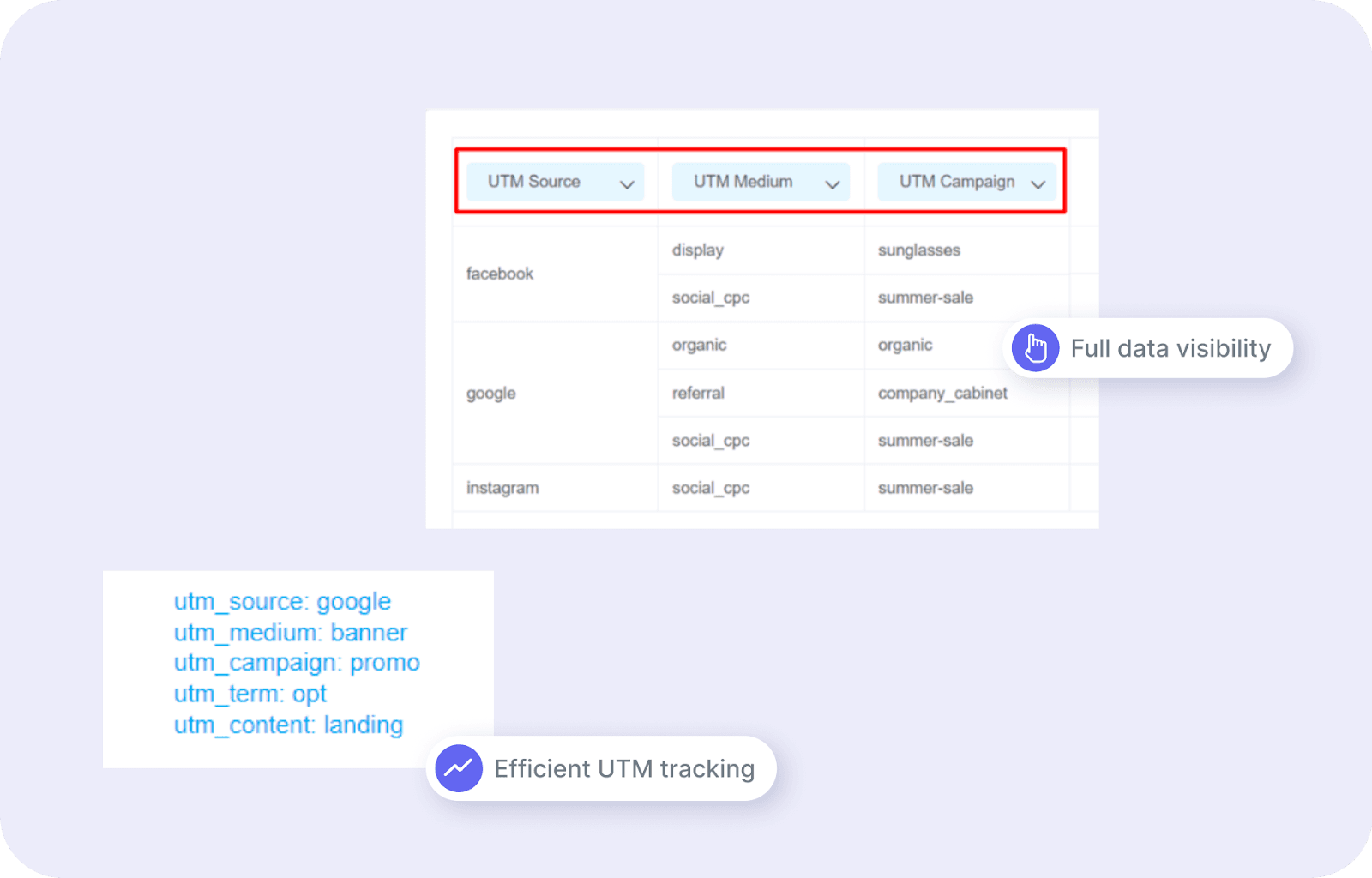
In the keyCRM system, UTM parameters are stored directly within the context where the lead or order was created. This ensures full visibility of the traffic source-led specific result. When a user arrives through a URL containing UTM tags, these parameters are captured and preserved at the moment the lead or order is created. For companies managing different types of campaigns in Google Ads, including Search, Performance Max, Shopping, Display, and YouTube campaigns, it is crucial to understand which traffic source resulted in confirmed orders.
Parameters are stored directly in each record and retain clear attribution to the traffic source. Data is captured not only from the website, but also from incoming calls and forms. This enables businesses to maintain attribution even for conversions assisted by managers or made over the phone. CRM allows users to analyze UTM data directly within analytical reports, including summary tables for funnels. This enables marketing and sales teams to visualise and deeply understand the whole funnel's effectiveness, not just fragmented pieces of data.
The conclusion
Google Ads automation system G-MOS is a powerful solution that drives performance increase and optimizes processes for all types of campaigns. At the same time, the keyCRM system is evolving into the primary source that tracks confirmed revenue and customer lifecycle value. Combining both automation solutions can bring valuable results for companies that want to scale their sales and marketing.
6 minutes
Posted by