Google Ads Automation: Hit 62x ROAS for Lithuanian E-commerce Varle.lt
Case studies
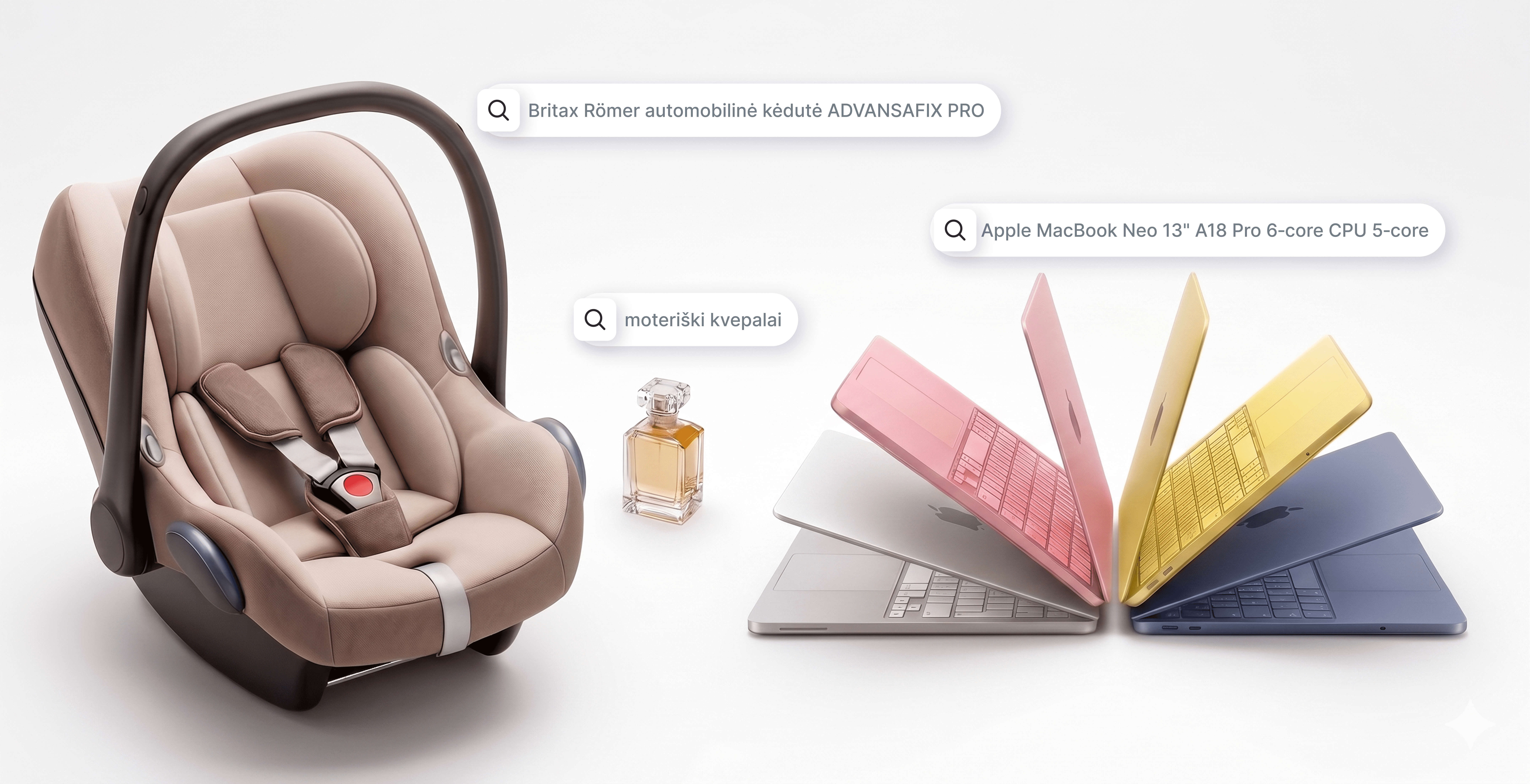
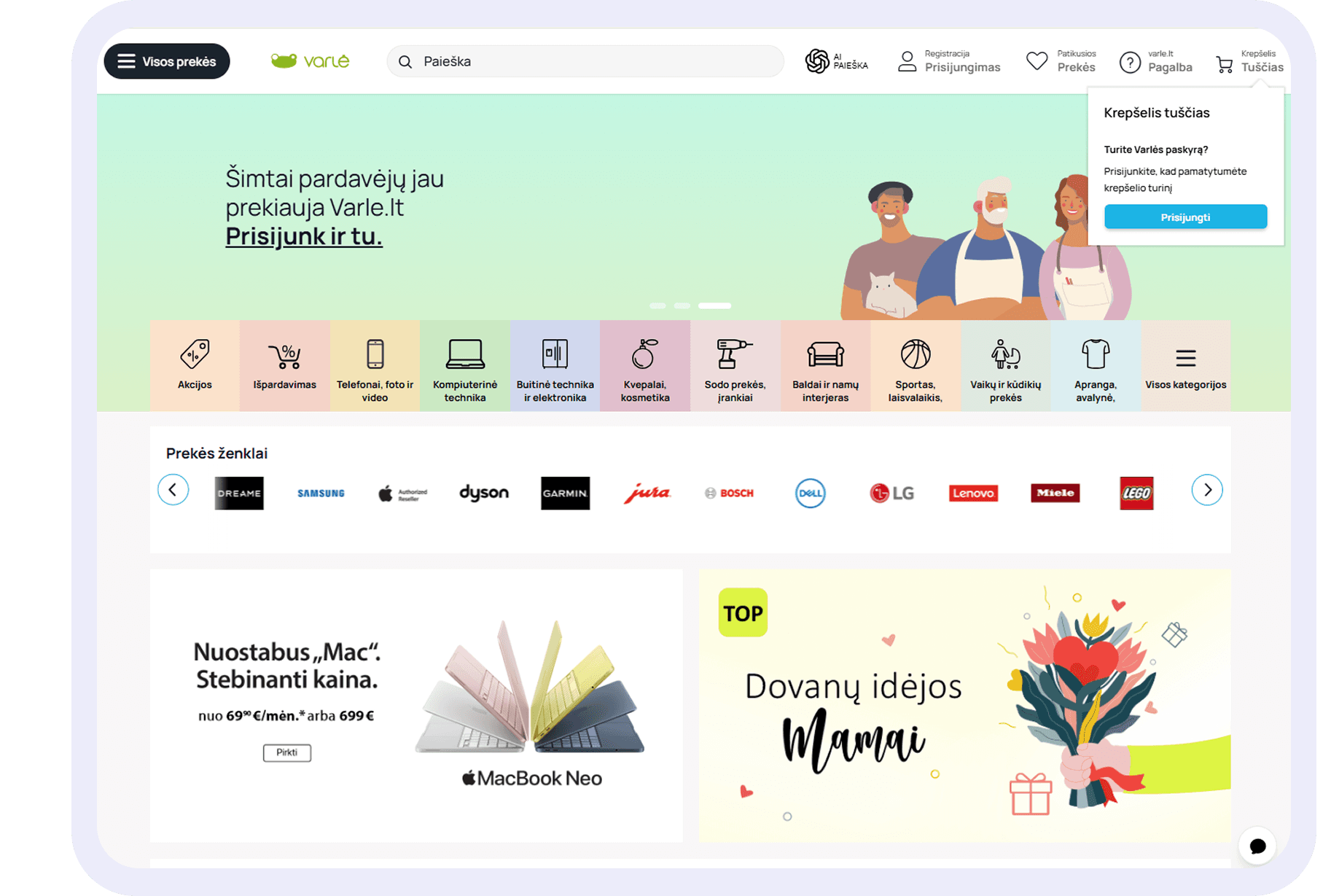
Varle.lt is one of Lithuania's largest multi-category online retailers and a marketplace, selling everything from consumer electronics and home appliances to food products, baby care, and seasonal goods.
The key challenge was to cover all product pages with Google Search Ads, keep hundreds of thousands of ads up to date, and scale the campaigns as the product catalog grows. Running Google Ads for inventory that updates every few minutes requires a system that stays accurate without requiring daily adjustments to the campaign settings. That is exactly the function for which G-MOS was created.
About the client
Varle.lt is a large multi-category online retailer and marketplace, offering nationwide delivery. The client operates a dynamic catalog with more than 925,000 products across 900+ active product categories within the G-MOS system.
The objective
Generate more sales from a large, fast-changing product catalog
Automate Google Ads keyword and campaign generation directly from the feed data
Eliminate wasted spend on unavailable or disabled products
Build advertising coverage across the full catalog without proportionally growing the team managing it.
The challenge: when the catalog outgrows the Search campaign
Varle.lt's catalog is never static: products go in and out of stock, prices change, seasonal categories expand, and new SKUs are added continuously. In paid search, the real challenge is keeping campaigns continuously aligned with real-time inventory, pricing, and demand without constant manual updates.
With frequently changing inventory, campaign structures built on static keyword lists and manually maintained ad groups quickly become outdated. This leads to ads running for unavailable products, while high-value categories remain underrepresented or missed entirely.
Google Shopping Campaigns are not available to advertisers in Lithuania. The standard playbook for large-catalog retail product-listing ads, driven by a Merchant Center feed, is unavailable. Product visibility is entirely dependent on paid search, requiring the search layer to ensure accurate, real-time coverage of the full catalog. Varle.lt requires a system that can automatically generate, update, and maintain ads from the catalog, ensuring continuous alignment with real-time feed data.
How G-MOS solved it
One catalog. One live campaign infrastructure.
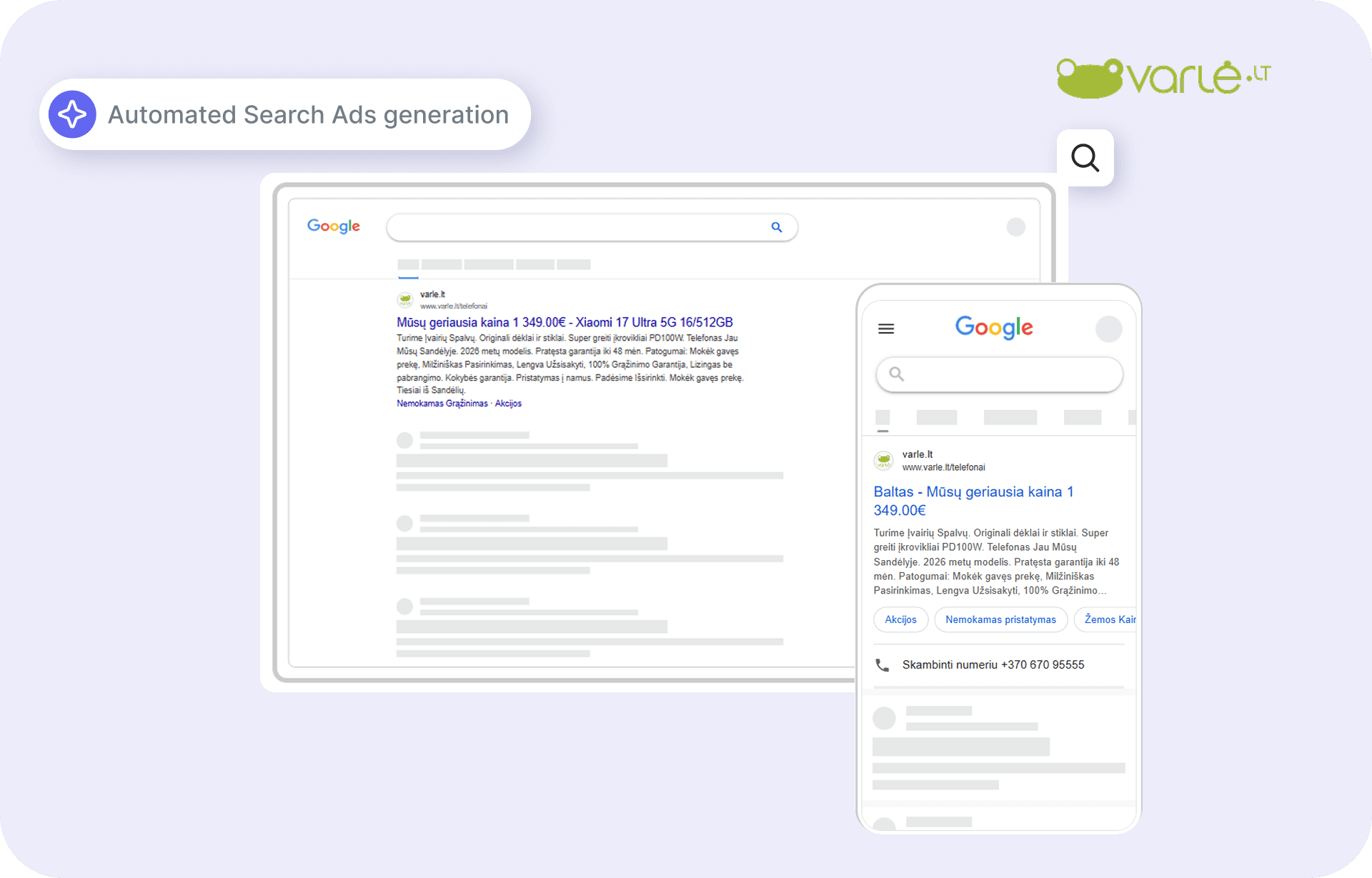
G-MOS connects directly to the product feed to build and operate the entire campaign structure. Search campaigns, ad groups, keywords, and ad copy are generated automatically from active feed data. As products are added, removed, or updated, campaigns adjust automatically with no manual rebuild required. Across two projects, feed-driven campaigns run over 15,000 products, distributed across active categories.
The result is full advertising coverage across active categories, structured by feed hierarchy, with campaigns that remain accurate as the catalog evolves.
Progressive keyword generation
One of the most impactful decisions in the Varle setup is the keyword generation algorithm. G-MOS offers three approaches: Simple, Progressive, and Without Algorithm.
The Progressive algorithm processes the product name as a sequence of words and systematically generates keyword combinations based on their positions, lengths, and character types. Instead of relying on predefined variants, it builds structured keyword sets by consistently combining elements of the product name using a rule-based approach, without reordering them.
This coverage matters because shoppers do not search for products by the way their names are written. For example, customers can type the model or part of it, or use broader combinations of the product name. The Progressive algorithm captures this variation directly from a single product entry in the feed, without any manual keyword research or expansion.
Importantly, the algorithm applies built-in controls to avoid low-quality combinations, for example, limiting keywords based on size-only attributes or non-meaningful fragments. This ensures the resulting structure remains relevant and efficient.
Replacing Google Shopping with feed-driven search in Lithuania
As Google Shopping campaigns are not available in Lithuania, paid search plays a more significant role in driving product visibility than in most markets. In this setup, search campaigns are responsible for covering the product catalog at scale.
This creates a structural challenge: maintaining consistent coverage and accuracy as the catalog continuously changes. Without a scalable system, campaigns quickly become outdated or incomplete.
To address this, the search setup is continuously aligned with the catalog's current state. When new products are added, they become eligible via updates. For Varle.lt, this means running Search Ads across thousands of active product categories with accurate availability and data.
Category-level structure across hundreds of active categories
Campaigns are structured to mirror the feed category hierarchy rather than grouping everything into a small number of broad campaigns. With hundreds of active categories, this granularity enables something that flat campaign structures fundamentally cannot support: independent budget control, bid management, and performance reporting per category.
High-performing categories can be prioritized directly. Underperforming segments can be isolated and adjusted without affecting the rest of the account. The full catalog stays covered, but spend follows actual performance data, not historical setup decisions.
Preventing spending on unavailable inventory
When a product goes out of stock or a category is disabled in the feed, G-MOS reflects that change in the campaign structure. Ads are paused automatically, and the budget is redirected toward what can actually be sold.
For the catalog of thousands of constantly changing products, maintaining alignment between campaigns and actual product availability is essential. Without it, ads continue to run for unavailable products, resulting in a measurable loss of efficiency.
Results: August 2025 – April 2026
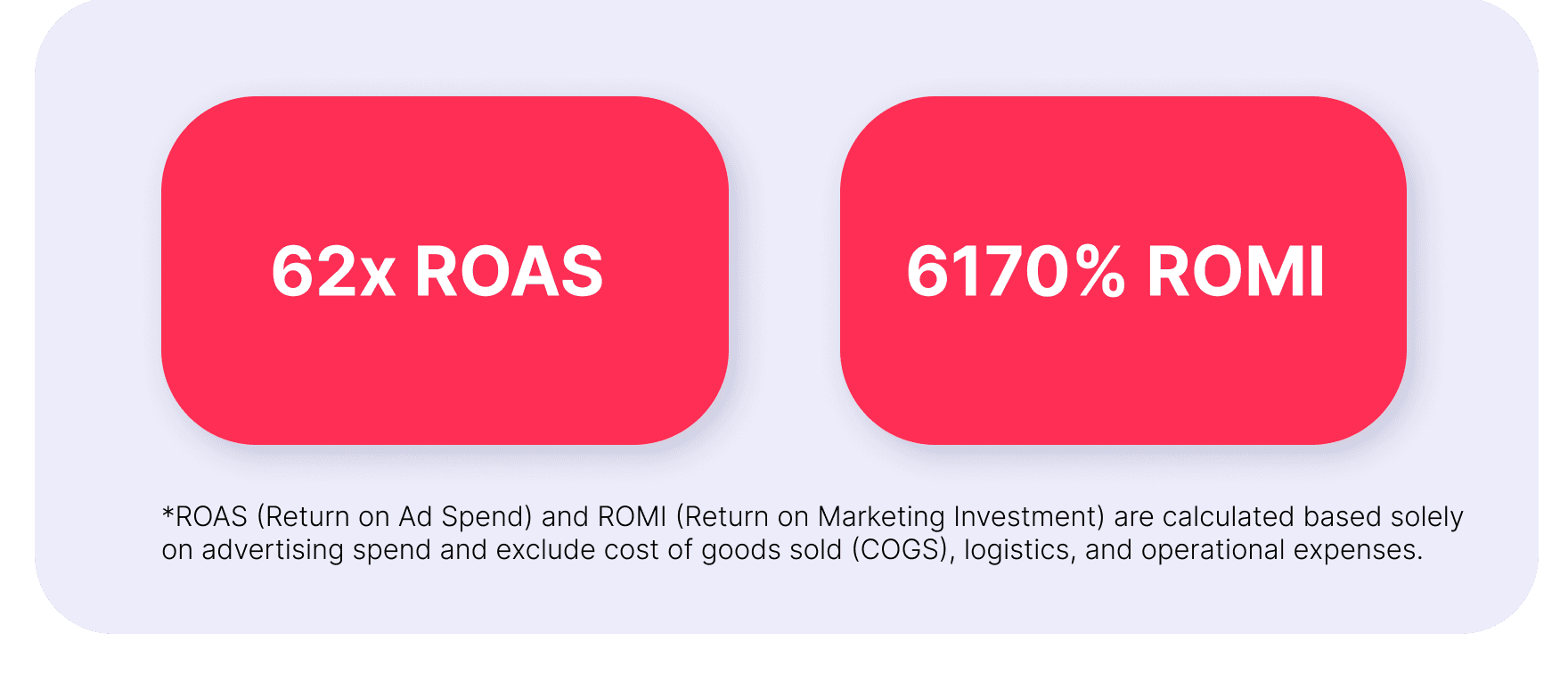
Performance: Over 8 months, G-MOS feed-driven campaigns across Varle. Its catalog achieved a 62x ROAS and a ROMI of 6170%. This corresponds to $62 in revenue generated for every $1 spent on Google Ads. The project is ongoing, and these results reflect performance to date.
Improved budget efficiency: Advertising spend is focused only on available products, reducing inefficiencies caused by outdated campaigns.
Full catalog coverage in search: With Google Shopping unavailable, paid search delivers consistent visibility across the active product catalog.
“I started working with G-MOS. The ads created with the smart templates turned out exactly as I expected. Now I also better understand why adding the manufacturer tag to the feed is so important.
Currently exploring the keyword generation tools as well — thanks in advance for the tips and best practices.”
Artur Aleksin, Performance marketing specialist, Varle.lt
Key Takeaways: Scaling paid Search without Google Shopping
Varle.lt built a paid search setup that maintains stable product visibility across a large and constantly changing catalog. Campaigns stay aligned with current product availability, ensuring that traffic is driven to items that can actually be purchased.
Running a large e-commerce catalog on Google Ads?
When manual campaign management can no longer keep up with the catalog's size and update frequency, feed-driven campaign generation becomes a more sustainable approach.
5 minutes
Posted by

Nadiia Prokofieva
Marketing manager
Background in PPC and digital marketing, focused on Google Ads automation and eCommerce growth.

You may also like:

+71% conversions in paid advertising for the region’s largest toy retailer
Case studies

How the G-MOS Bid and Budget module increased ROAS by 90.5% for FREETOUR.com
Case studies

How FREETOUR.com, a global tours marketplace, achieved +125% ROAS with Search ads automation
Case studies
Scaling e-commerce pet products: how ZooComplex achieved 5x revenue with G-MOS automation
Case studies