How FREETOUR.com, a global tours marketplace, achieved +125% ROAS with Search ads automation
Case studies

FREETOUR.com is a global tours marketplace operating across hundreds of destinations and multiple regional markets. Each destination has its own pricing, availability, and audience intent, and all of it changes constantly. That complexity is exactly the kind of problem G-MOS was built to solve.
After integrating G-MOS into their paid search strategy, Freetour.com's agency partner Promodo turned a loss-making account into one delivering a 26% reduction in CPA and a 125% increase in ROAS in just four months.
About the Client
FREETOUR.com is the world's first booking marketplace dedicated to free and budget-friendly tours. Part of the Viagio Group, a Zurich-based travel company, the platform serves travelers in six languages across Europe, the Americas, and Asia, connecting them with top-rated experiences in hundreds of cities worldwide.
Objective:
Significantly reduce CPA.
Reach at least break-even ROAS of 130%+
The Challenge
The account had no campaign segmentation by language, geography, or destination priority. Every tour market, high-converting and low-converting alike, was treated identically, with CPA-based optimization applied uniformly across the board.
The consequences were predictable: high-performing destinations subsidized wasted spend on poor-performing ones, budget allocation was blind to actual revenue potential, and with six languages in play, ad relevance for non-English markets was weak. CPA consistently exceeded travel industry benchmarks.
What the account needed was a system that could match the complexity of the product, one solution that could manage hundreds of destinations, adapt to language and geography simultaneously, and stay synchronized with constantly changing tour data. That system was G-MOS.
How G-MOS powered the tours marketplace
Feed-based search campaigns at scale
The starting point was building a structured data feed designed specifically for G-MOS, informed by a thorough analysis of search query patterns across Freetour.com's markets.
G-MOS used that feed to automatically generate search campaigns, keywords, and ad copy for every destination on the platform. As tour availability, pricing, and listings changed, the system kept all campaigns synchronized in real time. So it doesn’t require manual updates; as a result, no budget is spent on unavailable tours.
The campaign structure G-MOS enabled would have been practically impossible to maintain manually:
By language: campaigns built and localized for all six of Freetour.com's supported languages, with matching language targeting in Google Ads
By location: segmented at the city, country, and regional level for maximum relevance
By priority: destinations are split into high-priority and low-priority tiers based on performance data, with CPA targets adjusted per campaign accordingly.
The result was a search presence that was simultaneously broad in coverage and precise in targeting, with relevance and accuracy maintained automatically as the feed updated.
PPC campaign optimization: budget follows performance
With G-MOS Google Search campaigns segmented by language, location, and priority, it became possible to optimize tCPA individually for each campaign based on actual conversion data. Budget was directed toward segments demonstrating strong performance and pulled back from underperforming ones, a level of precision that unsegmented campaigns simply cannot support.
This granular control over budget allocation was a key driver of CPA reduction across the account.
Supporting the G-MOS foundation
With G-MOS anchoring the search layer, the Promodo PPC team built complementary campaign structures around it.
Localized Performance Max campaigns were launched targeting Spain — one in Spanish for the domestic market, one in English for European audiences interested in Spanish tours. Each used localized assets featuring user ratings, CTAs, and available tour counts per city.
Google's Measurement Protocol was implemented in May 2024, enabling actual booking revenue to flow directly into bidding signals. This aligned Smart Bidding optimization with real business value rather than proxy metrics, and complemented G-MOS's feed-based precision with revenue-aware automation at the bidding level.
A "one campaign per one country" restructure was applied to PMax campaigns based on accumulated geo and language performance data, with bidding switched from tCPA to tROAS after testing confirmed higher-value conversions under the revenue-based strategy.
Results after four months
G-MOS provided the structural foundation that made these results possible: a search layer that covered every destination, stayed accurate automatically, and gave the account team the segmentation needed to allocate budget with precision. The supporting campaigns amplified what G-MOS built — they could not have delivered at the same level without it.
In just a few months, ROAS surged by 125% while CPA dropped by 26%, turning performance around.

For businesses with large, frequently changing inventories: tours, routes, products, and listings, G-MOS keeps ad content accurate and campaigns performing without manual overhead.
4 minutes
Posted by

Nadiia Prokofieva
Marketing manager
Background in PPC and digital marketing, focused on Google Ads automation and eCommerce growth.

You may also like:

+71% conversions in paid advertising for the region’s largest toy retailer
Case studies

How the G-MOS Bid and Budget module increased ROAS by 90.5% for FREETOUR.com
Case studies
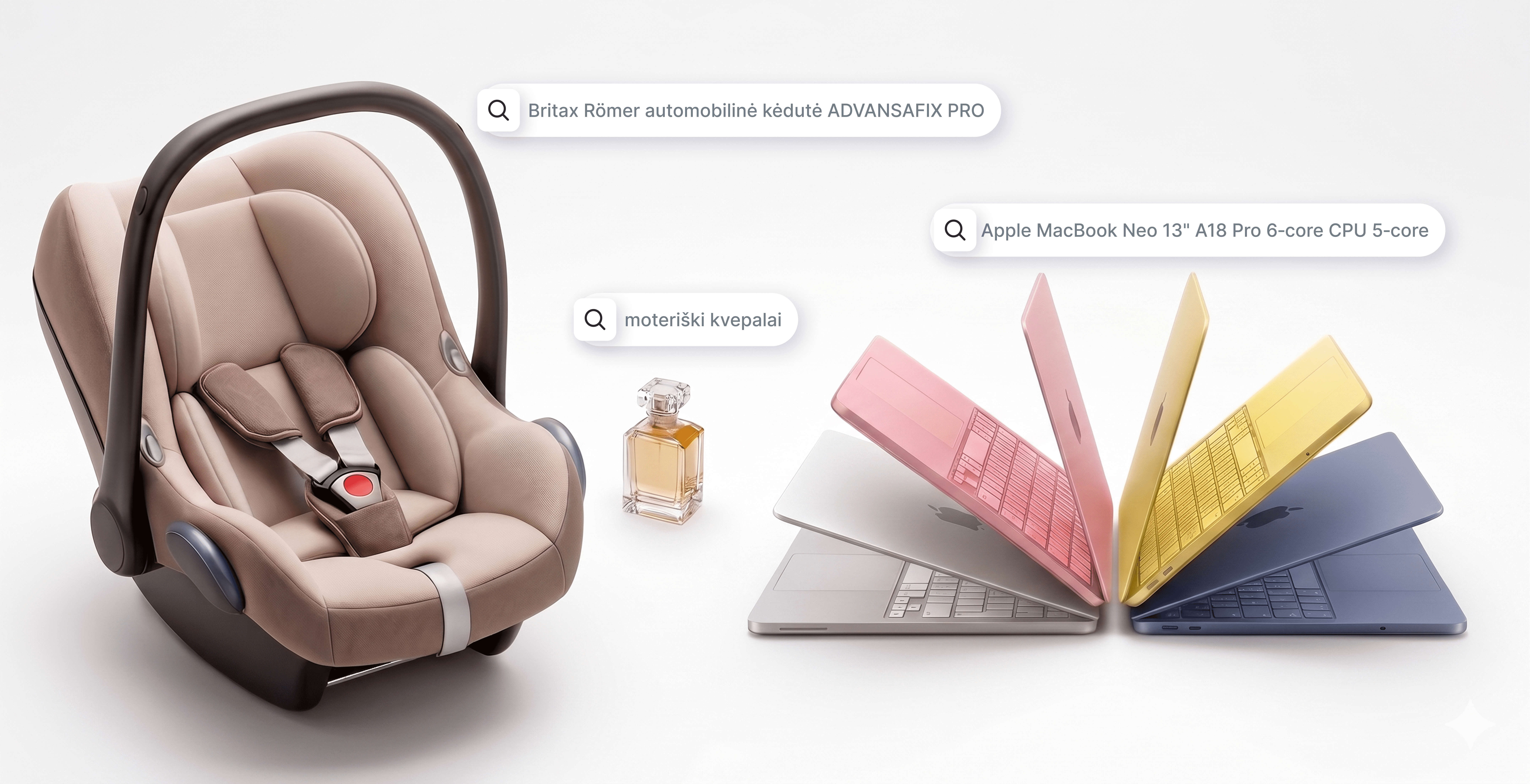
Google Ads Automation: Hit 62x ROAS for Lithuanian E-commerce Varle.lt
Case studies

Scaling e-commerce pet products: how ZooComplex achieved 5x revenue with G-MOS automation
Case studies